



For distance runners, few orthopedic diagnoses strike more terror than plantar fasciitis. That agonizing, stabbing pain beneath the heel on your first morning steps—as if stepping onto a razor-sharp shard of glass—has derailed countless marathon training cycles and forced dedicated athletes into months of frustrating inactivity.
Yet, modern sports medicine has radically rewritten our understanding of this condition. We now know that chronic plantar fasciitis runners experience is rarely an active inflammatory condition (‘-itis’); it is a degenerative collagen breakdown (‘-osis’) caused by mechanical tensile overload. Passive resting, ice packs, and cortisone injections merely mask symptoms temporarily without restoring the tensile load-bearing capacity of the plantar aponeurosis.
This evidence-based rehabilitation guide details the modern clinical protocol for curing plantar fasciitis. You will master the landmark Rathleff high-load strength training protocol, understand the biomechanical Windlass mechanism of the foot arch, configure therapeutic footwear transitions, and execute a structured return-to-running progression that prevents re-injury permanently.
Pathology: Why Plantar Fasciitis is Degenerative Fasciosis
Understanding the cellular failure of collagen fibers under repetitive tensile strain.
The Breakdown of Type I Collagen Bundles
The plantar fascia is a thick, fibrous band of connective tissue running from the medial tubercle of the calcaneus (heel bone) forward to the base of the toes. Its primary biological function is maintaining the medial longitudinal arch of the foot and acting as a dynamic spring during running.
Under excessive tensile overload—such as a sudden surge in weekly mileage, excessive hill sprints, or switching rapidly to zero-drop minimalist shoes—micro-tears develop faster than fibroblasts can synthesize new collagen. The organized Type I collagen fibers disorganize into chaotic, hyper-vascularized scar tissue with diminished tensile strength.
The First-Step Morning Pain Mechanism
During sleep, the foot rests in a relaxed, plantar-flexed position, allowing the damaged fascia to shorten and attempt healing overnight. When you take your first morning step out of bed, body weight abruptly forces the foot into 90 degrees of dorsiflexion.
This sudden mechanical elongation violently re-tears the newly formed collagen bridges, triggering intense acute pain. Understanding this mechanism highlights why wearing night splints that hold the foot in neutral dorsiflexion prevents morning re-injury.
The Rathleff High-Load Strength Protocol: The Clinical Gold Standard
How heavy, slow resistance loading stimulates robust collagen remodeling.
The Windlass Mechanism and Toe Elevation
In 2014, Danish researcher Michael Rathleff demonstrated that heavy slow resistance training produces vastly superior long-term clinical recovery compared to traditional calf stretching. The protocol relies on engaging the foot’s anatomical ‘Windlass mechanism’.
By rolling up a standard bath towel and placing it beneath the toes during single-leg calf raises, the big toe (hallux) is placed into maximum dorsiflexion. This tightens the plantar fascia over the metatarsal heads, ensuring that mechanical tension propagates directly through the injured aponeurosis during loading.
Execution, Tempo, and Progressive Overload Schedule
Stand on a stair ledge on one foot with the rolled towel under the toes. Rise up for 3 seconds (concentric), hold at the top for 2 seconds, and lower slowly for 3 seconds (eccentric). Perform 3 sets of 12 repetitions every other day.
Progress the load systematically: after two weeks, wear a backpack loaded with 5kg of books or dumbbells, progressing to 3 sets of 8 repetitions with heavy weights. High tensile loading signals tenocytes to lay down aligned, resilient collagen fibrils.
Footwear Transitions and Arch Support Mechanics
Selecting the right shoe geometry to offload tensile strain during the healing phase.
The Role of Heel-to-Toe Drop (8mm to 12mm)
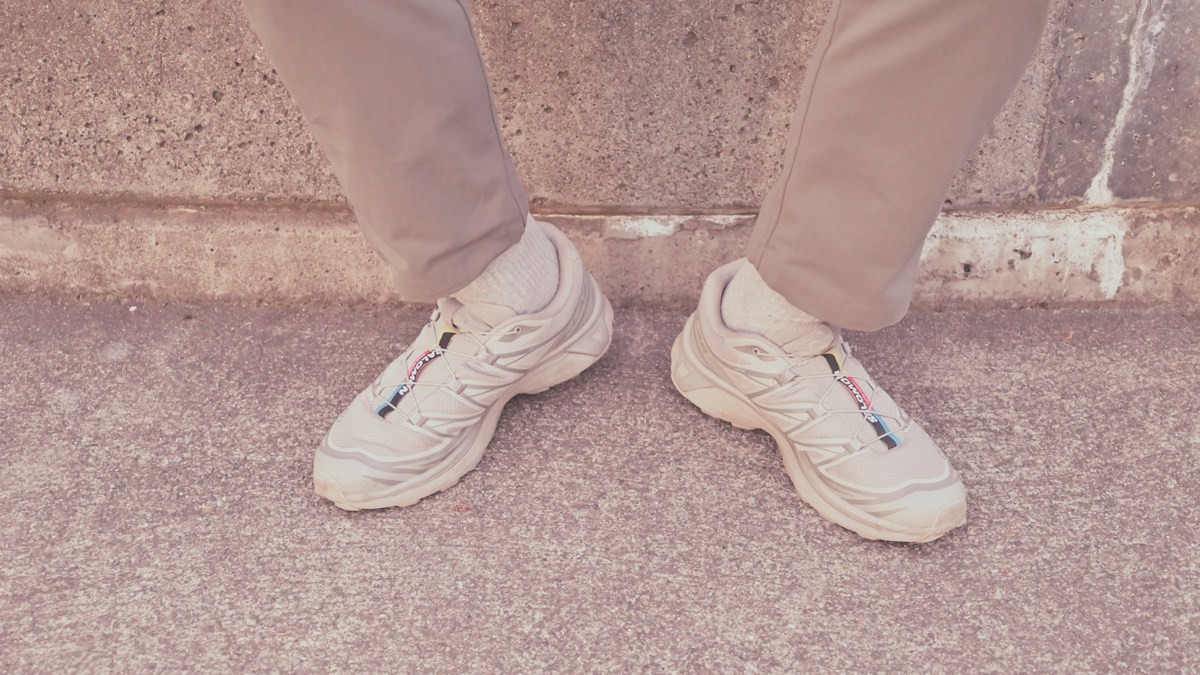
Low-drop or zero-drop shoes force the Achilles tendon and plantar fascia to stretch through extreme ranges of motion. During active rehabilitation, transition immediately to a running shoe with a high heel-to-toe drop of 10mm to 12mm.
The elevated heel slackens the posterior chain, reducing peak tensile strain on the calcaneal insertion point by up to 18% during walking and running.
Rigid Midsole Torsional Stability and Orthotics
Test your running shoes for torsional rigidity: grab the heel and toe and attempt to twist the shoe like a wet towel. If the shoe bends easily in the middle of the arch, it provides zero structural support to an injured fascia.
Choose shoes with a rigid shank and firm heel counter. Temporary semi-rigid orthotics or arch taping (Low-Dye taping) can dramatically reduce symptoms during the first month by distributing ground reaction forces across the midfoot.
The Structured Return-to-Run Progression
A gradual walk-to-run interval framework guided by morning pain scores.
The 24-Hour Pain Monitoring Rule
Runners do not need to wait for 100% pain-free status before resuming light running. The golden clinical rule is the 24-hour response: mild discomfort during running (up to 3 out of 10) is acceptable, provided pain does not worsen during the session.
Crucially, evaluate your pain on the following morning’s first steps. If morning pain remains below 3/10, your tissues tolerated the training volume. If morning pain spikes to 5/10, you exceeded tissue capacity and must take two rest days before stepping back one progression tier.
Walk-Run Interval Protocol
Begin with Phase 1: 10 cycles of 1 minute easy jogging alternating with 1 minute walking (20 minutes total). Execute every other day on smooth, flat asphalt or crushed gravel (avoid steep downhills and uneven trails).
Progress to 2 minutes running / 1 minute walking, then 4 minutes running / 1 minute walking, until you achieve 20 minutes of continuous easy running before gradually increasing weekly volume.
What Does Not Work: Ineffective and Harmful Treatments
Avoiding outdated therapies that delay healing or risk catastrophic tissue rupture.
The Danger of Repeated Cortisone Injections
Corticosteroid injections provide potent short-term pain relief, but randomized controlled trials show they significantly increase the risk of complete plantar fascia rupture and atrophy of the protective subcalcaneal fat pad. Fat pad atrophy is irreversible and permanently impairs heel shock absorption.
Reserve cortisone as an absolute last resort, and never accept more than a single injection under ultrasound guidance.
Aggressive Lacrosse Ball Grinding
Digging aggressively into an acutely inflamed heel with a hard lacrosse ball or golf ball causes localized contusion and exacerbates micro-tearing at the bone attachment site. Gentle rolling with a frozen water bottle for 5 minutes provides vasoconstrictive analgesia without mechanical trauma.
Plantar Fasciitis Rehabilitation Phased Recovery Schedule
| Recovery Phase | Timeline | Target Exercise | Footwear Strategy | Running Status |
|---|---|---|---|---|
| Phase 1: Acute Calming | Weeks 1 – 2 | Frozen bottle roll & towel scrunches | Max cushion slides & 12mm drop | Cross-training only (Cycling/Pool) |
| Phase 2: Heavy Loading | Weeks 3 – 6 | Rathleff single-leg raises (12 reps) | Rigid shank shoe + arch support | Initiate Walk/Run intervals (1:1) |
| Phase 3: Progressive Strength | Weeks 7 – 10 | Weighted Rathleff protocol (8 reps) | Standard 10mm running shoes | Continuous 20-30 min easy runs |
| Phase 4: Full Return | Weeks 11+ | Plyometric hops & eccentric maintenance | Full footwear rotation | Resume 100% structured training |
Recommended Further Reading & Authoritative References
To deepen your practical mastery of these concepts, explore our comprehensive analyses on preventing shin splints and lower limb injuries and how to choose the right running shoes. For official technical standards, peer-reviewed benchmarks, and industry guidelines, consult the Plantar Fasciitis on Wikipedia.
Frequently Asked Questions
What is the fastest way for runners to cure plantar fasciitis?
The evidence-based Rathleff protocol: heavy, slow single-leg calf raises with a rolled towel under the toes to engage the Windlass mechanism, performed every other day.
Can I continue running with mild plantar fasciitis?
Yes, provided the discomfort during running stays below 3/10 on the pain scale and first-morning steps the following day do not worsen.
Why is morning heel pain so intense with plantar fasciitis?
The fascia shortens in a relaxed plantar-flexed position overnight. Stepping out of bed abruptly stretches and re-tears the newly formed collagen fibers.
Should runners with plantar fasciitis use orthotics?
Semi-rigid orthotics or arch support inserts are highly effective during the first 6 to 8 weeks to offload tensile strain while building tendon capacity through strength training.