



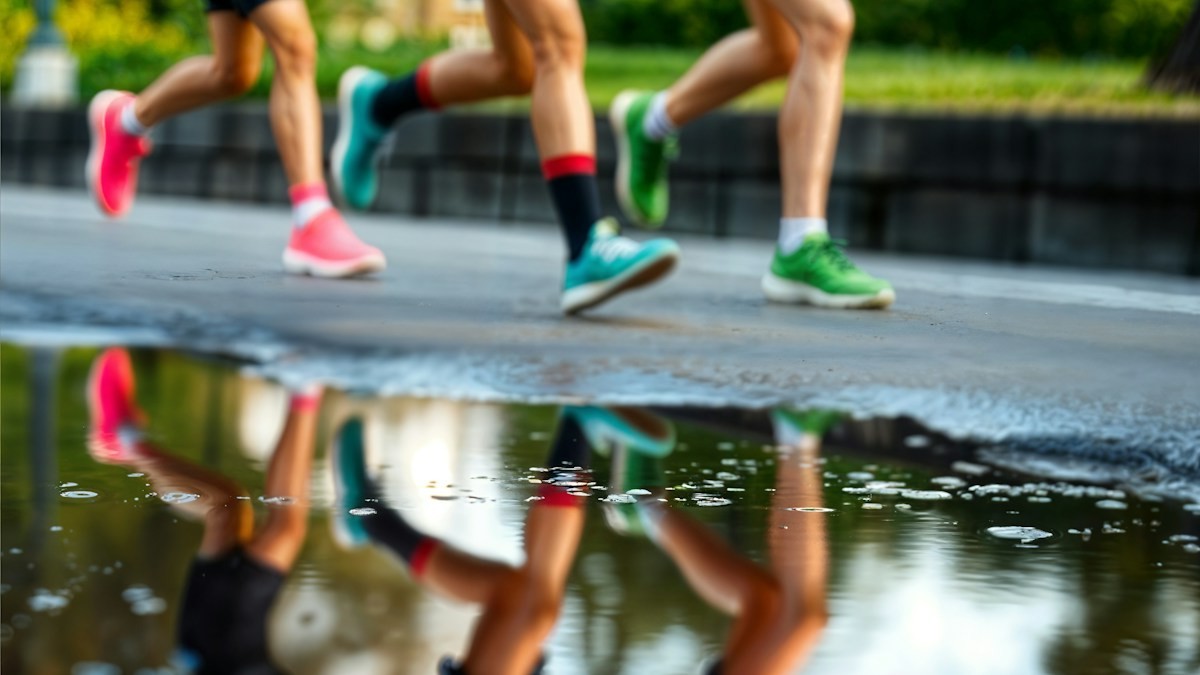
You are cruising through Mile 18 of your marathon training run, feeling mechanically strong and mentally confident. Suddenly, an excruciating, violent spasm locks your calf muscle into a rock-hard ball of agony. You stumble to the shoulder of the road, gripping your leg as involuntary muscle contractions ruin your pace. Every distance runner knows the terror of sudden, debilitating muscle cramps.
For decades, conventional wisdom blamed cramps entirely on simple dehydration or eating insufficient bananas. Modern exercise science paints a far more sophisticated neurological and biochemical picture. Muscle contractions are governed by an intricate electrical dance of mineral ions known as electrolytes: sodium, potassium, magnesium, and calcium. When high sweat rates drain these vital salts, neuromuscular transmission short-circuits.
Even more dangerously, drinking massive amounts of plain water without sodium can lead to Exercise-Associated Hyponatremia (EAH)—a potentially life-threatening drop in blood sodium concentrations. In this clinical sports medicine guide, we decode the precise science of electrolyte balance and cramp prevention. You will discover your personalized sweat rate, learn the exact milligram ratios needed during endurance running, and build a customized electrolyte hydration strategy.
The Science of Cramps: Altered Neuromuscular Control vs. Dehydration
Recent sports science research reveals two distinct mechanisms behind exercise-associated muscle cramping (EAMC).
The Neuromuscular Fatigue Hypothesis
Current scientific consensus emphasizes that muscle cramping often stems from muscle fatigue rather than electrolyte deficits alone. When a muscle is repeatedly overloaded at high speeds or unfamiliar intensities, the sensory Golgi tendon organs (which inhibit contraction) become depressed, while muscle spindle afferents (which stimulate contraction) become hyperactive.
This imbalance creates a runaway loop of involuntary motor neuron firing that locks the muscle fiber into continuous contraction.
The Electrolyte Depletion Hypothesis
However, systemic fluid and electrolyte deficits massively exacerbate this neuromuscular hyper-excitability. Sweat is not pure water; it is a hypotonic saline solution.
Heavy ‘salty sweaters’ who lose over 1,000 milligrams of sodium per hour experience a dramatic reduction in interstitial fluid volume surrounding muscle fibers, increasing mechanical pressure on nerve terminals and lowering the threshold for agonizing spasms.
Calculating Your Individual Sweat Rate and Sodium Loss
Sweat rate and sodium concentration vary by up to 300% from runner to runner. Customizing your intake requires calculating your hourly sweat baseline.
The 60-Minute Nude Weigh-In Protocol
Weigh yourself completely naked on a digital scale immediately before a 60-minute training run at marathon pace. Do not drink fluids or urinate during the run. Weigh yourself naked again immediately upon returning, towel-drying all surface sweat.
Every 1 pound (0.45 kg) of lost body mass equals roughly 16 fluid ounces (475 ml) of sweat lost. If you lost 2 pounds, your hourly sweat rate is roughly 32 ounces (950 ml) per hour.
Are You a ‘Salty Sweater’?
If your black running cap or shirt develops gritty white crusts after drying, or if your sweat burns your eyes intensely, you are a heavy salty sweater. Salty sweaters lose up to 1,500mg of sodium per liter of sweat and must supplement with high-sodium electrolyte mixes (such as LMNT or Skratch Labs High Sodium).
Runners with clear sweat and zero salt stains lose roughly 400 to 600mg per liter and require standard hydration formulations.
Target Ratios: Sodium, Potassium, and Magnesium Protocols
Maintaining cellular electrical gradients requires balancing extracellular and intracellular mineral ions in harmonious proportion.
Sodium: The Undisputed King of Endurance Electrolytes
Sodium represents 90% of all electrolytes lost in sweat. Aim to replace roughly 50% to 70% of your hourly sodium loss during running (target 300 to 700 milligrams of elemental sodium per hour in warm weather).
Sodium maintains blood plasma volume, stimulates the thirst mechanism in the brain, and facilitates active glucose absorption in the small intestine.
The Supportive Role of Magnesium and Potassium
While sweat contains minimal potassium (100-200mg/L) and magnesium (10-30mg/L), these minerals are critical co-factors for cellular adenosine triphosphate (ATP) enzyme reactions and muscle fiber relaxation.
Supplementing with 30 to 50mg of bioavailable magnesium glycinate or magnesium citrate daily supports restful sleep, reduces nocturnal muscle twitches, and promotes optimal muscle tone.
Essential Electrolytes for Distance Runners: Daily & Hourly Ratios
| Electrolyte Ion | Primary Physiological Function | Hourly Sweat Loss Range | Target Ingestion / Hour | Optimal Whole Food Sources |
|---|---|---|---|---|
| Sodium (Na+) | Extracellular fluid volume & nerve impulses | 500 – 1500 mg / hour | 300 – 700 mg / hour | Pickles, salted pretzels, sea salt, miso broth |
| Potassium (K+) | Intracellular hydration & cardiac rhythm | 100 – 300 mg / hour | 100 – 200 mg / hour | Bananas, sweet potatoes, coconut water, dried apricots |
| Magnesium (Mg2+) | Neuromuscular relaxation & ATP synthesis | 10 – 50 mg / hour | 30 – 60 mg / hour | Pumpkin seeds, dark chocolate, spinach, almonds |
| Calcium (Ca2+) | Muscle fiber cross-bridge contraction | 20 – 80 mg / hour | 40 – 80 mg / hour | Yogurt, kefir, chia seeds, fortified almond milk |
| Chloride (Cl-) | Maintains osmotic pressure & gastric acid | 400 – 1000 mg / hour | Co-ingested with sodium | Table salt (NaCl), Himalayan pink salt, celery |
Recommended Further Reading & Authoritative References
To deepen your understanding of these systems, review our companion analysis on Pre-Run and Post-Run Fueling and Hydration Vests vs. Handheld Bottles. For official technical specifications and industry standards, consult the NIH Clinical Study on Exercise-Associated Muscle Cramps.
Biomechanical Longevity & Training Progression Safeguards
To maximize your long-term success with Electrolyte Balance and Cramp Prevention, runners must respect physiological adaptation cycles and avoid premature volume escalation. Neuromuscular adaptations occur within two to three weeks, but connective tissues, ligaments, and bone mineral density adapt substantially slower over six to eight weeks of consistent stress.
Integrate dedicated mobility sequences focusing on the posterior kinetic chain, ankle dorsiflexion, and hip stabilization before each demanding training effort. Monitoring subjective recovery indicators such as resting heart rate, morning sleep quality, and muscle tightness provides early warning signs of overtraining syndrome.
Always pair focused physical training with proper sleep architecture and nutrient timing. Giving your body sufficient structural repair intervals ensures steady athletic progression while keeping chronic overuse injuries permanently at bay.
Frequently Asked Questions
Why does drinking too much plain water cause hyponatremia?
Drinking excessive pure water without sodium dilutes the remaining sodium in your bloodstream. When blood sodium drops below 135 mmol/L, water rushes into brain cells via osmosis, causing cerebral edema, confusion, seizures, and in severe cases, fatal collapse. Always include sodium on runs exceeding 90 minutes.
Do bananas really cure muscle cramps during a run?
Bananas are rich in potassium, but cramps during running are rarely caused by acute potassium deficiency (potassium is stored abundantly inside muscle cells). While bananas provide excellent fast carbohydrates, sodium is the mineral that prevents sweat-induced cramping.
Are salt chewable tablets better than liquid electrolyte drinks?
Both are physiologically effective. Chewable salt tablets (like SaltStick) allow you to customize your sodium intake independently from your fluid volume, which is ideal on cool, dry days where you sweat heavily in salt but require less total liquid volume.
Can compression socks prevent lower leg calf cramps?
Graduated compression socks enhance venous blood return and reduce muscle oscillation (the micro-vibrations muscles experience upon ground impact). While compression does not replace electrolytes, reducing muscular microtrauma helps delay the onset of neuromuscular fatigue.